

We hosted our fourth capstone showcase for the Brains Research Accelerator earlier this month!
The fellows who presented (now organized by last name):
Ben Adler
Designing bacteriophages for antibiotics, cancer treatment, and more.
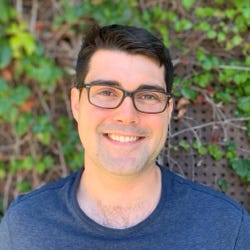
Program Summary: Ben is building SPEAR-C, a program to make precision phage therapy designable for strain-selective microbiome intervention. SPEAR-C focuses on Fusobacterium nucleatum, an oral bacterium whose disease-associated strains colonize 30–50% of colorectal cancers and may drive cancer progression. The program builds the missing open foundation for precision targeting: phage collections, clinical host panels, functional maps, genome-editing workflows, and predictive models. By making phage targeting programmable rather than trial-and-error, SPEAR-C aims to create a reusable template for adaptive, strain-selective antimicrobials.
Bio: Ben discovers and engineers biological function encoded in the evolutionary arms race between bacteria and their viruses, bacteriophages. He bridges high-throughput screening, computational genomics, and genetic design to understand how phages infect bacteria and how those mechanisms can be rewritten. His work has produced widely adopted experimental platforms for phage genome editing and functional genomics, including CRISPR-based systems for efficient phage engineering. Ben received his Ph.D. in Bioengineering from UC Berkeley & UCSF with Dr. Adam Arkin and completed postdoctoral work with gene-editing pioneer Dr. Jennifer Doudna.
Justin Burrell
Manufacturing neural tissue for treating spinal cord injuries
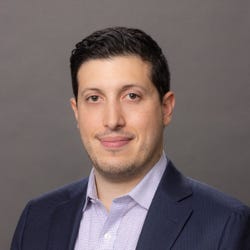
Program Summary: Syntherian is developing engineered neural tissues designed to restore damaged neural connections following paralysis, spinal cord injury, stroke, Parkinson’s disease, and other neurological disorders. To enable clinical translation, our team is developing the manufacturing, characterization, and quality systems required to produce these complex living therapies reliably and at scale. Its long-term goal is to make engineered neural tissue broadly accessible for research, clinical development, and future patient care.
Bio: Justin Burrell, PhD, is a neuroengineer focused on developing engineered living neural systems for the treatment of neurological disorders. Over the past decade, he has helped develop, manufacture, implant, and evaluate engineered neural tissues in rodent and large-animal models of neurological injury and disease. Dr. Burrell is a Research Associate in Neurosurgery at the University of Pennsylvania and holds an MS in Neuroscience and a PhD in Bioengineering.
Victoria Chernow
Directly processing domestic ores into high-performance alloys
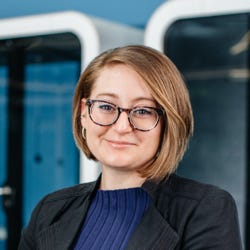
Program Summary: Victoria is developing a program to advance revolutionary single-step processes that transform metal ores directly into high-performance alloys, collapsing today’s 4-20+ step manufacturing chain into one operation. Current alloy production is extremely energy-intensive, making high performance materials 4-30x more expensive than steel. This program will support breakthrough technologies that eliminate processing bottlenecks and reduce energy consumption by 50%, bringing lightweight, corrosion-resistant alloys to steel-like prices. Success will enable widespread deployment of high-performance alloys, unlocking applications across American industry.
Bio: Victoria is a materials scientist who identifies the cost drivers and bottlenecks that keep high-impact energy technologies from being deployed at scale. She is a Climate & Energy Scientist at Science for America, a nonprofit solutions incubator, where she explores ways to turn captured carbon dioxide into valuable, scalable products. Previously, she was an early-stage deep tech investor and a Fellow at the U.S. Department of Energy’s Advanced Research Projects Agency-Energy (ARPA-E), shaping programs in advanced building materials and next-generation nuclear energy. She holds an M.S. and Ph.D. in Materials Science from Caltech.
Allegra Cohen
Human-AI interfaces for better sensemaking without compromising understanding
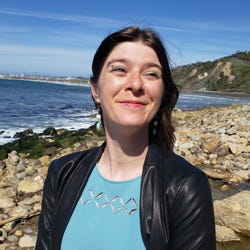
Program Summary: Allegra is building the Sensemaking Challenge, a competition to help human-AI teams make sense of the world without compromising human understanding. Humans have many cognitive strategies, from drawing diagrams to organizing information spatially, but the chat interface makes it hard to use many of them. The Sensemaking Challenge will find the methods, tools, interfaces and environments that let us share these strategies with machines. In the short term, we expect better performance in domains that resist automation, like intelligence analysis. In the long term, we see these modalities as critical for retaining understanding and control of our systems.
Bio: Allegra has spent years working on how machines can help humans understand complicated systems. She currently runs the Talk to the City program at the AI Objectives Institute and explores what tools for thought should look like in the age of LLMs. Previously, she was at DARPA where she launched and ran the Collaborative Knowledge Curation portfolio. Allegra holds a Ph.D. in computational modeling from the University of Florida and a B.S. in Symbolic Systems from Stanford University. You can read some of her work at www.seewhatuthink.com.
Paul Litvak
AI systems to assess the reliability of academic literature
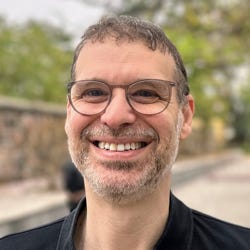
Program Summary: Paul is building an AI system that weighs scientific evidence the way a careful, critical scientist would: flagging numbers that don’t add up, assessing methodology across whole bodies of research. People make health decisions on the strength of published studies, and billions in philanthropic dollars follow the interventions the research seems to support. But peer review is overextended, the volume of papers keeps growing, and there’s no scalable way to tell which findings actually hold up. Getting this right means the people and organizations making these high-stakes decisions can see what the evidence really supports, and choose better.
Bio: Paul is the founder and Executive Director of the Robyn Dawes Institute for the Improvement of Science and a Visiting Scholar at UC Berkeley. He holds a PhD in Behavioral Decision Research from Carnegie Mellon, where he studied emotion and the sunk cost bias. Over 15 years in tech he led the ML teams behind search ranking and price suggestions at Airbnb, built ad-review models at Meta, and ran large-scale experiments on social influence at Google. He also co-founded Rhythmic Health, a venture-backed biosensing startup, where he led product and built a low-cost system to measure salivary lactate from a color-changing strip and a smartphone.
Leo McElroy
A new open-source CAD kernel built for AI and 21st century computing
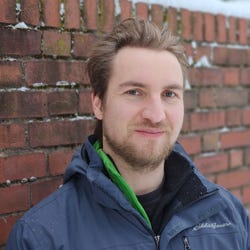
Program Summary: Leo is building an open foundation for engineering design software: the technology that turns a description of a shape into a manufacturable object. Today these tools are fragmented. Designers create a shape in one program and test whether it works in a completely separate one. If shape, physics, and manufacturing share one representation, software can verify that a part works as it’s designed, and that loop can be automated. Engineers could redesign a space telescope and check its optical performance in minutes, not weeks, and AI could design objects a human can edit and a computer can verify.
Bio: Leo is an independent researcher developing the technology used to design objects on computers. He has built novel constraint-solving algorithms and consults with companies developing CAD tools. He has created dozens of custom design programs for objects ranging from circuits to boats. At Hack Club he designed and built open-source hardware and software for making games, music, and art used by tens of thousands of teenagers worldwide. He has published research on digital fabrication and traveled the world working with inventors and craftspeople as a Watson Fellow.
Jiwoon Park
Predicting the results of cancer biopsy assays from optical images

Program Summary: Jiwoon is building FUSION, a spatial GPS for human tissue that decodes how diseases progress structurally in the body. Genomics identifies the parts list of a cell but lacks the spatial context needed to predict patient outcomes. FUSION is an open AI framework that predicts the molecular and spatial profile of tissue directly from the standard slide every hospital already produces, built on the Spatial Atlas of Human Anatomy (SAHA) consortium she leads. It aims to learn why cancers spread to specific organs and which patients respond to treatment, bringing molecular-grade diagnosis to any hospital instead of the few centers that can afford it today.
Bio: Dr. Jiwoon Park leads spatial multi-omics and AI initiatives across Harvard Medical School and Weill Cornell Medicine, translating emerging biotechnologies into clinical impact. She directs the Spatial Atlas of Human Anatomy (SAHA) consortium, mapping millions of cells into one of the largest spatial references of human tissue, and is developing FUSION, an AI framework that predicts the molecular and spatial profile of tissue from standard slides. Her work spans cancer metastasis and precision medicine. She holds a Ph.D. from Cornell University and builds community through the GESTALT, HCA, and STOC.
Will Plishker
New tools for democratized minimally-invasive surgery
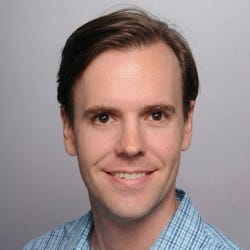
Program Summary: Will is developing a program to make minimally invasive surgery easier than open surgery by combining recent advancements in AI and haptics in other domains and focusing them on the key challenges of minimally invasive surgery (MIS). This program will support teams focusing on these key challenges, namely surgeons’ experiences in vision, touch, and tool use, turning those areas where they feel restricted compared to open surgery into capabilities superior to open surgery. Just increasing the conversion of open surgery to MIS by 10% in the US would affect millions of surgeries, save billions of dollars for the US health care system, and save thousands of lives.
Bio: Will is a medical imaging entrepreneur and technologist who bridges high-performance computing and clinical care. As co-founder of IGI Tech and ACREW Imaging, he has led the development of multiple FDA-cleared medical imaging products and their deployment. With over 15 years’ experience, he has created image enhancement systems for radiology, radiation oncology, interventional procedures, and vascular and cardiac surgery. Will holds a Ph.D. from UC Berkeley and completed postdoctoral work at the University of Maryland in medical image analysis. He was a Mayfield Fellow and NIH Commercialization Acceleration Program graduate.
Bharath Ramsundar
A programming language that enables AI to do verifiable physics
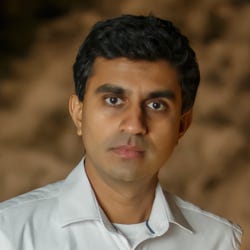
Program Summary: Bharath is working to connect AI with the physical world. Today’s AI systems lack common sense due to a lack of understanding of basic physics. Physika is a programming language for turning physical theories into executable, verifiable programs. This combination of capabilities enables the construction of “physically grounded world models” that provide AI with verified models of the world grounded in the laws of physics and calibrated to experimental data. Physika and physically grounded world models will enable next-generation AI systems to understand physical reality, thereby unlocking transformational applications in science, engineering, and robotics.
Bio: Bharath is the founder and CEO of Deep Forest Sciences, which is building an AI-powered suite for drug and materials design and discovery. Bharath received a BA and BS from UC Berkeley in EECS and Mathematics and was valedictorian of his graduating class in mathematics. He did his PhD in computer science at Stanford University where he studied the application of deep learning to problems in drug discovery. At Stanford, Bharath created the DeepChem open-source project to grow the deep drug discovery open-source community. Bharath’s graduate education was supported by a Hertz Fellowship, the most selective graduate fellowship in the sciences.
Anubhav Sinha
Mapping the peripheral nervous system
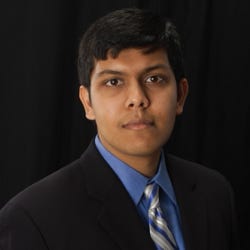
Program Summary: Anubhav invents and deploys high-resolution imaging to systematically map how the peripheral nervous system (PNS) shapes disease processes across the body. By adapting technologies used for brain mapping in mice to the periphery, OPeNS will create “wiring diagrams” of the PNS that chart how neurons thread through the body with both cellular and anatomical precision to map how the structure and composition of the PNS change in disease. Building such an atlas will unlock the ability to precisely dissect how the PNS impacts disease and will enable the discovery of new therapeutic targets to treat diverse conditions, including cancer, inflammatory disease, and aging.
Bio: Anubhav is a neuroengineer and synthetic biologist who builds technologies to study the interplay between neurons and their spatial context. He is currently a postdoc at MIT where he is developing and deploying these technologies to study the peripheral nervous system. During his PhD in the Harvard-MIT Program in Health Sciences and Technology, he co-led the development of targeted expansion sequencing, a technology for spatially precise measurements of gene expression in biological specimens, and deployed the platform to study the spatial organization of the mouse brain, patient tumor biopsies, and mouse embryonic development.
Thomas Teisberg
Measuring Antarctic sea ice with drones to put tighter bounds on future sea levels
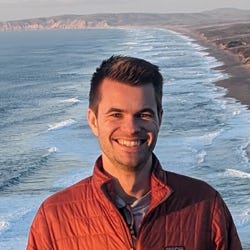
Program Summary: Thomas is building a robotic observatory for Antarctica to reduce uncertainty in future sea level rise and monitor for early warnings of tipping points. Earth’s ice sheets are expansive and difficult to access, making it expensive to scale up to the data collection we need. Robotic platforms can cut the costs of data collection at scale, but achieving this scale is beyond the reach of conventional research entities. Thomas plans to take new observational approaches from prototype to production and operate them at scale, starting with a stratospheric radar sounder, capable of collecting crucial subsurface scientific data at a fraction of the conventional cost.
Bio: Thomas is an electrical engineer who uses novel sensors and robotics to better understand how the Earth works. He co-developed an open-source ice-penetrating radar platform and used it to deploy a UAV-borne radar sounder in Greenland, Iceland, and Svalbard. He has worked on making observational data freely and reproducibly available, developing tools to analyze and share hundreds of terabytes of field data ranging from the first airborne surveys of Antarctica to data collected this year. Thomas has a Ph.D. in electrical engineering from a geophysics lab at Stanford University.
Chris Wilmer
Electronic noses
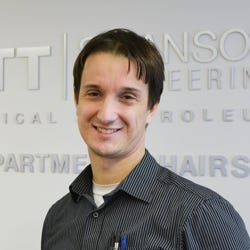
Program Summary: The Universal Robotic Nose Project (“Project URN”) is dedicated to building the first universal gas sensor so machines can have the sense of smell. Whereas dogs have nearly 1,000 olfactory receptors, existing electronic noses have only a few dozen, which severely limits their usefulness. Scaling to higher receptor counts has been bottlenecked by the absence of chemically diverse material libraries and accurate models of receptor-gas binding. Leveraging the recent explosive growth of materials and new AI-enhanced models, we have developed methods to scale to hundreds of receptors and beyond, thus establishing the foundation for general-purpose machine olfaction.
Bio: Chris is the leader of Project URN and a professor at the University of Pittsburgh who specializes in the interactions between gases and surfaces. His lab designs metal-organic frameworks (MOFs), which are materials that act like sponges for gases. For example, MOFs can be used to soak up methane for energy storage or to remove carbon dioxide from the atmosphere. Now Chris is using MOFs to create artificial olfactory receptors to make noses for robots. In addition to 60+ scientific publications, he has co-founded two deep tech companies (Numat & Aeronics) and was named to the Forbes 30-Under-30 in Energy.
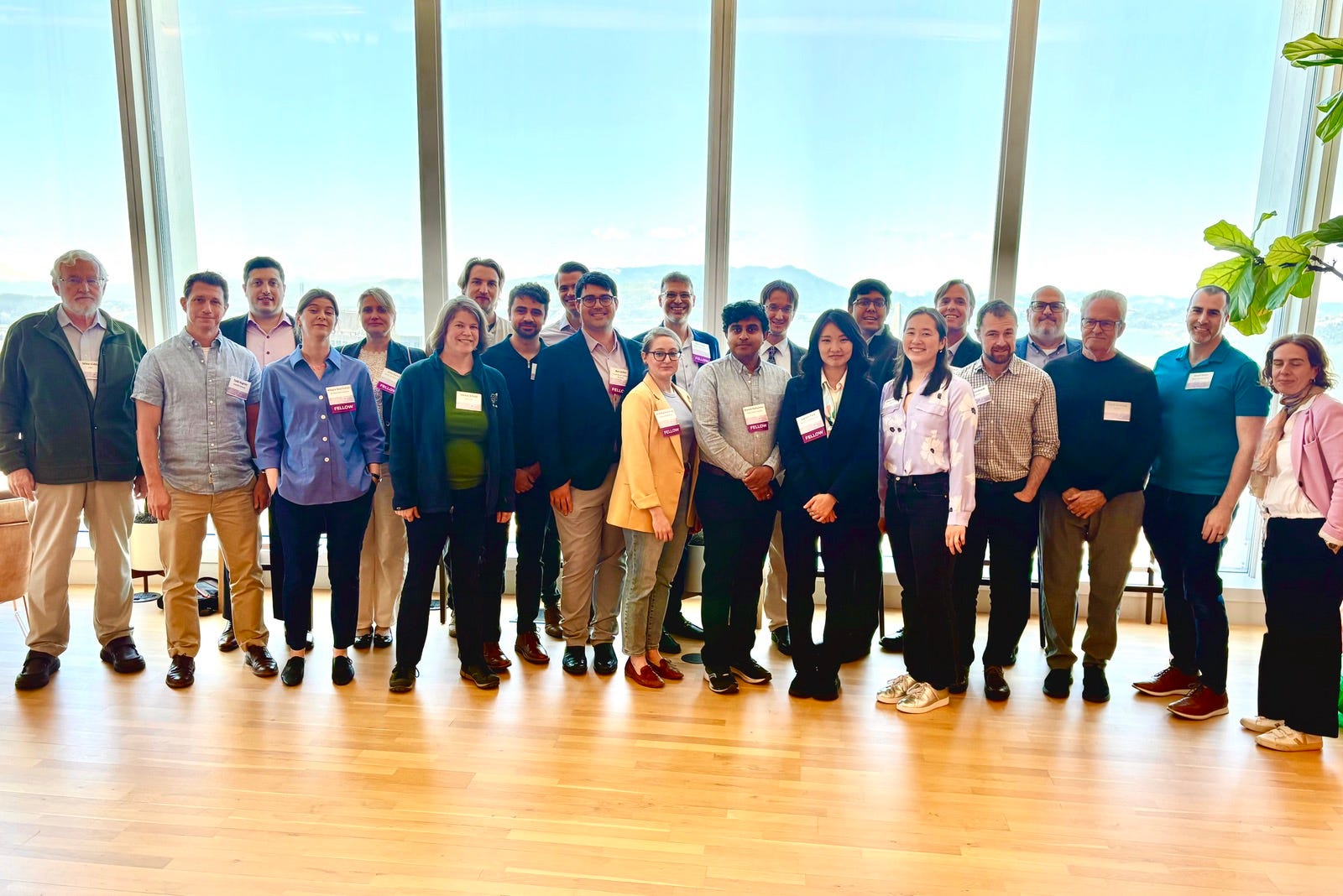
If you or anybody you know would like to connect to any of the fellows or learn more about what they’re working on, feel free to reach out to them directly or contact us at brains@spec.tech.
As always, this is a team effort. Thank you to everyone who helped make the program a success: the mentors who worked with the fellows, the research leaders who sharpened their ideas, the Brains team who created new resources for the cohort, our advisors and events team, and many others behind the scenes.
Last year, we noted that there are compounding effects from programs like Brains. This year (our third) we are starting to see them play out: alumni who have started programs came back and helped this year’s fellows, cultural knowledge about starting coordinated research programs is starting to propagate organically, and fellows are starting to collaborate across cohorts.
We want to keep building on those compounding effects. The next Brains cohort is tentatively set to begin in January 2027.
So:
If you have an ambitious science or technology research idea that is a poor fit for a single academic lab and doesn’t make sense as a startup (or are already working on one), keep your eyes peeled in the fall for when we open applications for the first cohort of 2027!
If you know someone who might be a good fit for the program, please route them our way!
If you work at an organization that might want to hire or fund current or future fellows, or support the Brains program itself – please get in touch!
Applications for our next Brains cohort open October 2026!


